
Triangular Fibrocartilage Complex (TFCC) Injuries of the Wrist
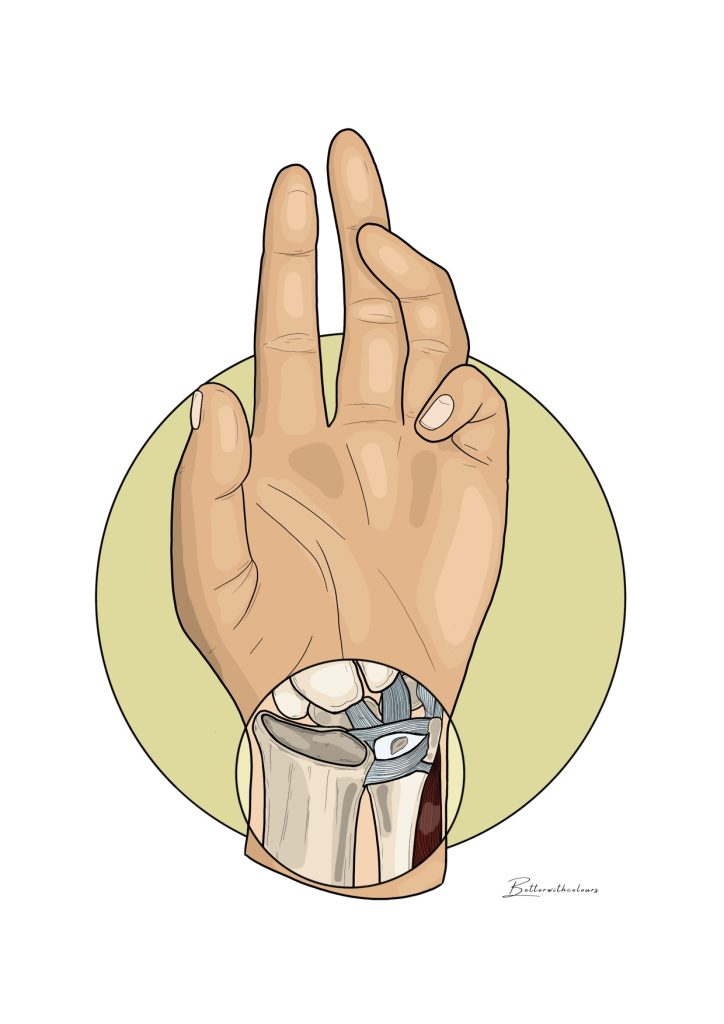
The triangular fibrocartilage complex is a complex structure located between the ulna and the carpal bones. Its function is to cushion the transmission of loads from the hand, and it plays a fundamental role in stabilizing the wrist, primarily during pronation and supination movements. It is a complex structure composed of multiple components, and any of these components can cause pathology. Therefore, a specialized evaluation is necessary for accurate diagnosis.
Direct trauma
The most common cause is falls on the hand, which increase pressure on the fibrocartilage, injuring it.
Repetitive movements
Activities that require repetitive wrist movements with ulnar deviation, such as racquet sports, can subject the fibrocartilage to continuous stress, which can eventually lead to injury.
Degenerative diseases
It can be damaged as a result of degenerative or inflammatory diseases such as rheumatoid arthritis.
Fractures
It is very common for injuries to the triangular fibrocartilage complex to be associated with distal radius fractures, especially when there is significant shortening of the radius with the fracture.
Symptoms of Triangular Fibrocartilage Complex Injuries
The symptoms that can appear are numerous, although the two most frequent are, by far, pain and instability:
Pain
It is usually located on the ulnar side of the wrist and appears especially with twisting or ulnar deviation movements.
Swelling
Sometimes, an increase in volume with signs of inflammation may be observed in the affected area.
Wrist Instability
Especially in cases of injury to the insertion of the triangulated fibrocartilage complex, it can manifest as wrist instability, particularly with forearm rotation exercises.
Clicking or Locking Sensations
Some people may experience a "clicking" or locking sensation when rotating their forearm.
Diagnosis
Diagnosis is usually achieved through a thorough physical examination and medical history, supported by imaging tests. X-rays are often ordered to look for indirect signs or associated injuries, although magnetic resonance imaging (MRI) is the preferred test, as it allows visualization of the fracture and its location in many cases.
In cases of diagnostic uncertainty, wrist arthroscopy can be performed with the dual purpose of both diagnosis and treatment of the injury at the same time.
Treatment
Treatment should be individualized for each patient, but generally it is usually approached in the following ways:
Hand therapy and immobilization
In acute cases, it can be resolved with appropriate immobilization followed by hand therapy; in chronic but mild cases, pain and function can be improved with appropriate hand therapy.
Wrist arthroscopy
Most fibrocartilage lesions can be treated arthroscopically, allowing for reattachment (in cases of a foveal lesion) or repair (in cases of peripheral lesions).
Would you like a valuation? Make an appointment with us.
Every case is unique. If you need an expert opinion on your situation, we will be happy to help you. Fill in the form and we will contact you to give you a personalised assessment and, if you wish, arrange an initial appointment.