
Scaphoid and Other Carpal Bone Fractures
The carpus consists of eight bones that form part of the wrist joint. These bones are small, but they play an essential role in wrist movement and the proper transmission of loads from the hand to the rest of the upper limb. Therefore, injuries at this level can be very debilitating, seriously affecting upper limb function and quality of life.
The carpus is made up of two rows of bones: the proximal row, formed by the scaphoid, lunate, triquetrum, and pisiform; and the distal row, composed of the trapezium, trapezoid, capitate, and hamate.
The most frequently injured bone is the scaphoid, followed distantly by the other carpal bones. This bone is unique in that its poor vascularization makes it difficult to heal after a fracture, thus requiring specialized treatment.
Fractures of the scaphoid and other carpal bones are frequently caused by trauma, with falls onto an outstretched hand being the main mechanism of injury for the scaphoid. Other common traumas include sports injuries, traffic accidents, and direct blows to the wrist.
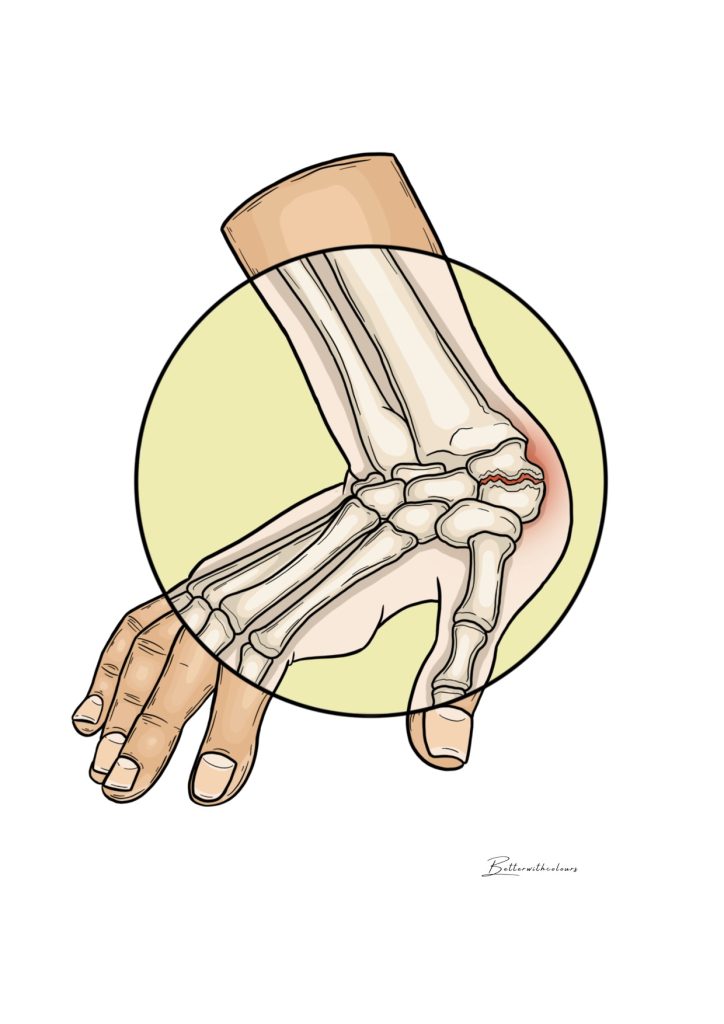
Symptoms of Scaphoid and Other Carpal Bone Fractures
Symptoms of a carpal bone fracture include:
Pain
Although it can radiate, pain is usually localized to the fractured bone and is reproduced with axial loading and wrist movements.
Swelling
The fractured area often shows signs of inflammation resulting from the fracture.
Bleeding and hematomas
Due to bleeding from the fractured bone, skin discoloration or blood pooling may be present.
Decreased range of motion
Fractures can present as a limitation of normal joint range of motion.
Diagnosis
The diagnosis is usually made through a thorough medical history and physical examination, which establishes a high index of suspicion, and is supported by imaging tests for confirmation. X-rays are typically taken in various projections, although in some cases a CT scan or MRI is necessary for accurate diagnosis.
Treatment
Treatment will depend on the fractured bone, the fracture pattern and its location, as well as the patient’s characteristics, preferences, and the time elapsed since the injury. Generally, treatment could include:
Immobilization
In cases of early diagnosis, where the fracture is not displaced, adequate immobilization with a splint is usually sufficient.
Surgical treatment
In cases of advanced or displaced fractures, or those where conservative treatment has failed, surgical intervention is usually necessary for resolution.
Complications
A relatively common complication of scaphoid fractures is pseudoarthrosis and avascular necrosis of the proximal pole, which occur due to inadequate blood supply, interrupted at the time of the fracture. In these cases, it is essential to consult a specialist to increase the chances of success. Often, a combination of surgical procedures is required for treatment, which typically includes osteosynthesis, non-vascularized bone grafts, and pedicled and free vascularized bone grafts.
Would you like a valuation? Make an appointment with us.
Every case is unique. If you need an expert opinion on your situation, we will be happy to help you. Fill in the form and we will contact you to give you a personalised assessment and, if you wish, arrange an initial appointment.