
Reconstructive surgery of the lower extremity
This refers to the branch of reconstructive surgery that restores the coverage, form, or function of the upper extremity. There are many causes that may require reconstructive surgery for treatment, the most frequent being traumatic, although infectious, tumorous, congenital, iatrogenic, etc., can also occur.
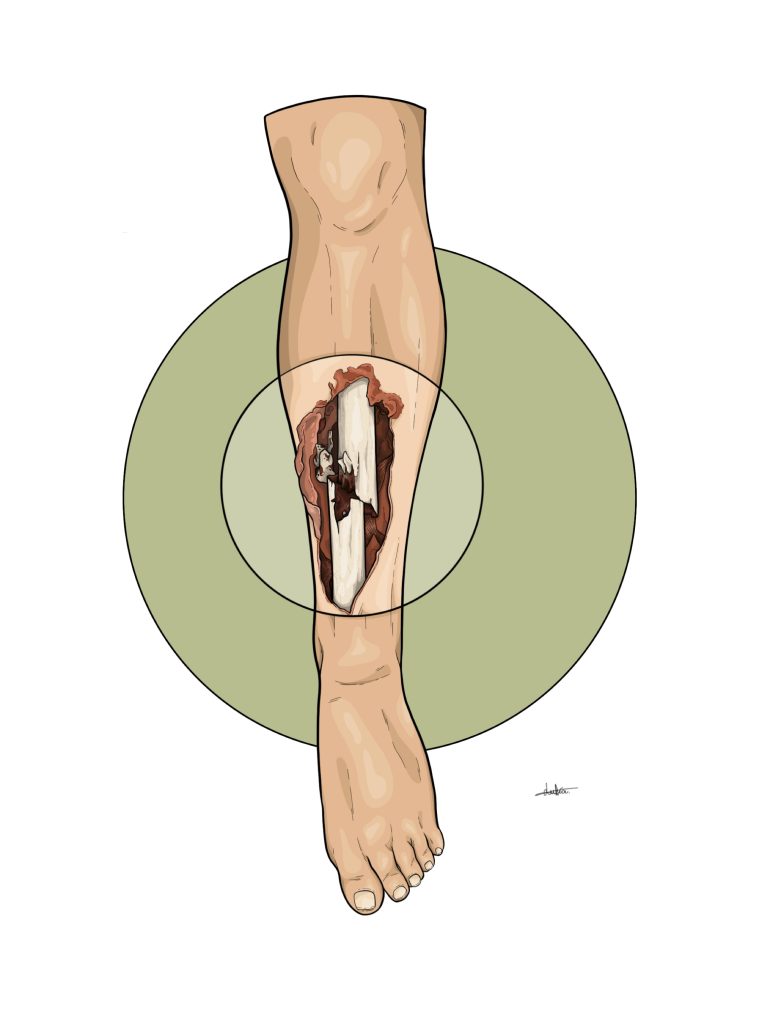
Lower limb coverage
The most frequent cause being trauma, this involves skin or composite defects (skin, muscles, etc.) that often expose underlying vital tissues (frequently tendons, bones, or fracture sites). In these cases, early coverage is essential to optimize results, minimizing the risk of potential complications such as osteomyelitis or pseudoarthrosis.
Nerve and Palliative Surgery
When a nerve injury occurs in the lower limb, significant gait disturbances often result, with the corresponding functional repercussions. Peripheral nerve surgery can frequently be used to restore function, or, if necessary, tendon transfers can be performed to improve lower limb function. The most common pathology of this type is foot drop, caused by injury to the common peroneal nerve, which can be resolved through nerve surgery or tendon transfers to restore foot function.
Osteomyelitis and Pseudoarthrosis
High-energy fractures at this level are frequently associated with soft tissue injuries, exposing the fractures and significantly increasing the risk of developing osteomyelitis. If osteomyelitis develops, treatment requires adequate bone resection of the affected tissue, followed by appropriate reconstruction using bone flaps or bone grafts.
Diabetic Foot Surgery
In patients with long-standing diabetes, altered sensation and vascularization in the foot are common, making them more prone to difficult-to-treat ulcerations. Reconstructive surgery can often be used to repair these ulcerations, and procedures to reduce the likelihood of recurrence (arthrodesis, tendon transfers, etc.) may be combined with other procedures.
Vascular Ulcer Coverage
Patients with vascular problems in the lower limb (of arterial or venous origin) may develop difficult-to-treat ulcers. In these cases, reconstructive surgery may be necessary to achieve healing.
Would you like a valuation? Make an appointment with us.
Every case is unique. If you need an expert opinion on your situation, we will be happy to help you. Fill in the form and we will contact you to give you a personalised assessment and, if you wish, arrange an initial appointment.