
Burns and their consequences
Burns are serious injuries that can affect the skin and underlying tissues, causing skin loss and potentially leading to long-term consequences.
Although the most common burns are thermal (from fire, boiling water, etc.), there are other less frequent causes of burns such as chemical, friction, and electrical burns.
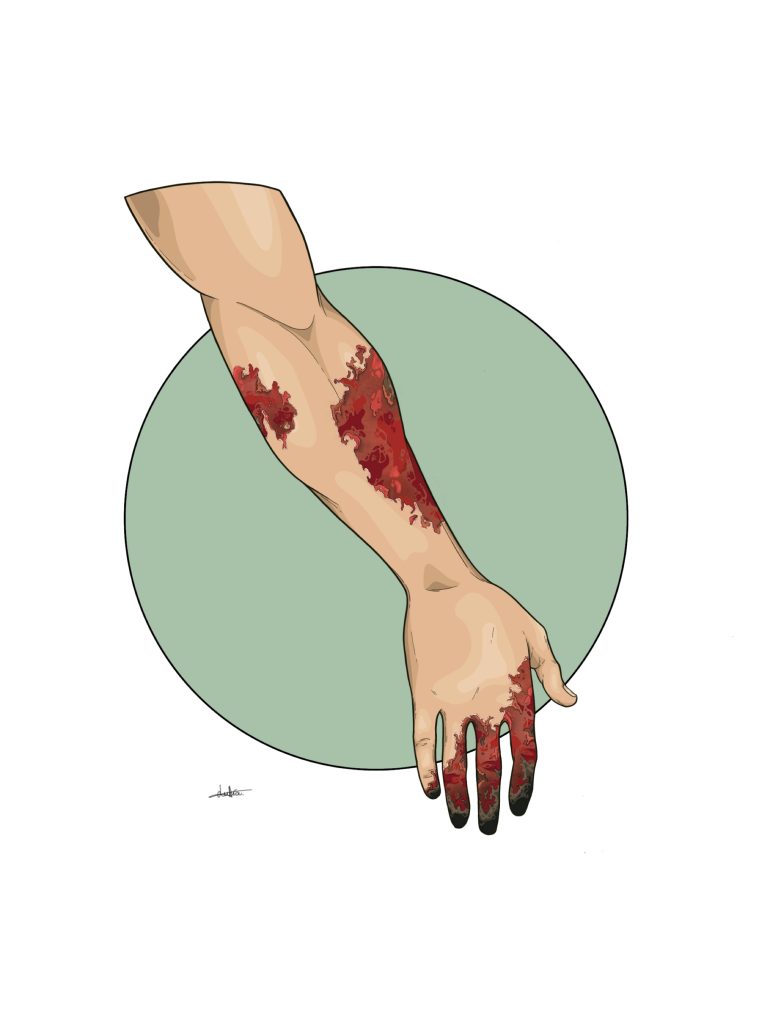
First-degree burns
These burns affect only the outermost layer of skin (epidermis), causing redness, pain, and some swelling. They generally do not leave significant scarring.
Second-degree burns
These burns affect both the epidermis and the dermis, which can cause blisters, severe pain, and, in some cases, permanent scarring.
Third-degree burns
These burns destroy all layers of the skin and even the underlying tissues. They may require reconstructive surgery and often leave permanent scars.
Fourth-degree burns
This category is reserved for burns that extend beyond the subcutaneous tissue, affecting muscles or bones. They are usually caused by electrical shock.
Burn Treatment
Most burns do not require surgical treatment. Only deep second-degree and third-degree burns require surgical intervention, which usually consists of debridement of the burn and placement of a skin graft/flap.
Burn Sequelae
When burns are not treated correctly and promptly, the likelihood of long-term sequelae increases. The main sequelae of burns are:
Scars
Burns can develop hypertrophic or keloid scars, with significant functional and aesthetic impact.
Retractions
When burns occur near skin folds and mobile structures, skin retractions may develop, causing functional limitations (especially in the case of joints) and aesthetic concerns (frequent on the free edges of the face).
Chronic Pain
Severe burns can cause persistent pain even after initial healing. Nerve damage in the affected area can generate a constant sensation of pain.
Aesthetic Disfigurement
When burns affect the facial region, they can cause significant disfigurement (often with alopecia), requiring reconstructive surgery for improvement.
Treatment of Burn Sequelae
In most cases, significant improvement in the sequelae of burns can be achieved, restoring normal range of motion in joints and improving aesthetics. This requires a combination of reconstructive surgery procedures and expertise, using Z-plasty, local and free flaps, skin grafts, skin expanders, etc.
Why is specialized treatment important?
Proper treatment of burns and their sequelae can make the difference between a partial and a complete recovery. Reconstructive surgery specialists have the knowledge and tools necessary to effectively address the sequelae of burns, helping patients regain both their functionality and their self-confidence.
Would you like a valuation? Make an appointment with us.
Every case is unique. If you need an expert opinion on your situation, we will be happy to help you. Fill in the form and we will contact you to give you a personalised assessment and, if you wish, arrange an initial appointment.