
Tendon Injuries
What are they?
A tendon is a fibrous structure that connects muscle to bone, allowing joint movement. When the tendons in the hand are injured, whether from direct trauma, overuse, or repetitive strain, various pathologies can occur, which can ultimately affect hand function. Depending on their progression, they can be classified as “acute” or chronic injuries.
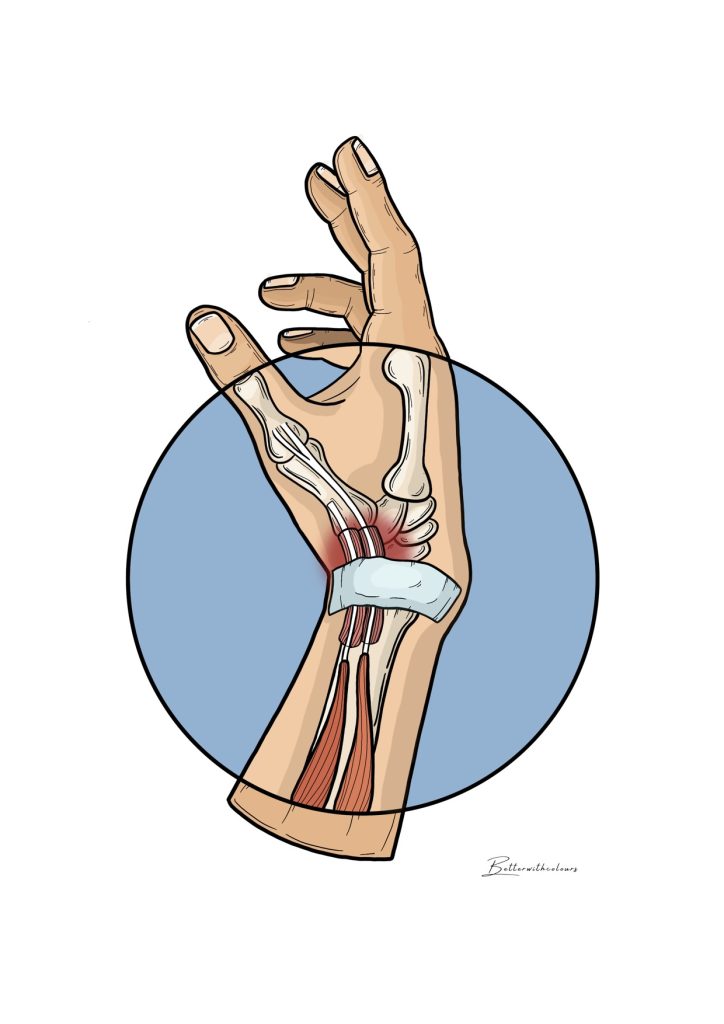
Acute Tendon Injuries
Acute tendon injuries are those that occur suddenly, usually as a result of direct trauma, a cut, or sudden, intense physical exertion. Several types of injuries can be distinguished at this level:
- Tendon Rupture or Section: This usually occurs due to a laceration, typically secondary to an accident involving glass or a work-related injury. The clinical presentation is usually pain and loss of mobility, and sometimes, it may be associated with injury to other structures such as nerves or blood vessels. The management of this type of injury is usually surgical.
- Acute Tendinitis: Acute tendinitis is a sudden inflammation of a tendon due to injury or overuse. This causes pain, swelling, and stiffness in the affected area. Treatment is generally conservative, with immobilization, anti-inflammatory medication, and rehabilitation to prevent long-term complications.
Chronic Injuries or Tendinopathies
Chronic injuries or tendinopathies are those that usually result from excessive and repetitive use of the hand. They typically have an insidious onset and can become very debilitating in some cases. Management is generally conservative, although surgical intervention may be required in some instances. Some of the most common tendinopathies affecting the hand are:
- De Quervain's Tendinopathy: This is one of the most common tendinopathies of the hand, affecting the epicondyle (EPB) and anterior plantar fascia (APL) tendons as they pass through the first extensor groove. Clinically, it manifests as pain on the radial side of the wrist, which worsens with activity and ulnar deviation of the wrist.
- Epicondylitis/Epitrochleitis: This is a tendinopathy that affects the insertion of the forearm muscles at the elbow, potentially causing radiating pain from the wrist to the elbow.
- ECU tendinopathy/instability: This is usually caused by instability of the extensor carpi ulnaris, which leads to popping or jerking during pronation and supination of the forearm, resulting in pain on the ulnar side of the wrist.
- Other
Would you like a valuation? Make an appointment with us.
Every case is unique. If you need an expert opinion on your situation, we will be happy to help you. Fill in the form and we will contact you to give you a personalised assessment and, if you wish, arrange an initial appointment.