
Rheumatic Hand
Rheumatic hand is a term that describes the effects of rheumatic diseases, such as rheumatoid arthritis, on the joints of the hand. In these diseases, the immune system mistakenly attacks the joints (the synovial tissue), causing inflammation and, over time, potentially damaging the joint structures, including bone, cartilage, and tendons. This leads to deformities in the fingers and wrist, and causes functional limitations for patients.
Within this group, rheumatoid arthritis is the most common cause of rheumatic hand, but other autoimmune and rheumatic diseases can also contribute to this condition, such as ankylosing spondylitis or psoriatic arthritis.
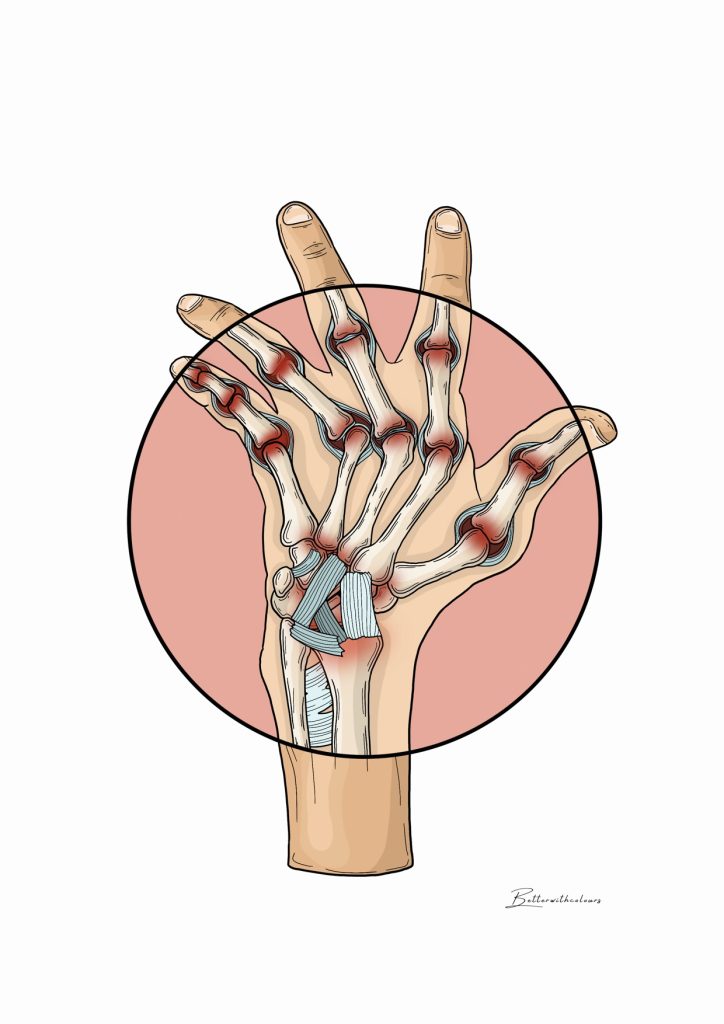
Causes of Rheumatic Hand
The main cause of rheumatic hand is rheumatoid arthritis, an autoimmune disease that primarily affects the synovial tissue of the joints. In addition, there are other factors that can contribute to the development of rheumatic hand:
Genetic factors
People with a family history of rheumatic diseases have a higher risk of developing rheumatic hand.
Autoimmune diseases
Diseases such as rheumatoid arthritis, psoriatic arthritis, lupus, scleroderma, etc., can eventually affect the hands of patients.
Age and sex
Rheumatoid arthritis primarily affects women between 30 and 50 years of age, although it can appear at any age.
Environmental factors
Such as tobacco use.
Symptoms of Rheumatic Hand
The symptoms of rheumatic hand typically follow a chronic course with flare-ups, and can cause the following in patients:
Joint pain and tenderness
People with rheumatic hand experience pain and discomfort in the joints of their fingers and wrist.
Inflammation
The affected joints become inflamed, which can cause swelling and stiffness in the hands.
Morning stiffness
Hand stiffness is usually more noticeable in the morning, making it difficult to move the fingers and wrist upon waking.
Finger deformities
As the disease progresses, the joints can deteriorate, causing secondary deformities in the fingers (ulnar deviation, boutonniere fingers, swan necks, etc.) or wrist (ulnar translation, radial deviation, carpal supination, etc.).
Loss of functionality
Over time, chronic inflammation can limit the range of motion in the fingers and wrist, affecting the ability to perform daily activities such as writing, buttoning clothes, or lifting objects.
Diagnosis
The diagnosis of the underlying disease is primarily clinical, using diagnostic criteria (which vary depending on the specific disease). In the case of hands and wrists, a specific evaluation by a professional is required to assess which structures are affected and determine if surgical treatment might be beneficial.
Treatment of Rheumatic Hand
Initial treatment is primarily medical to achieve disease control, mainly with medications such as DMARDs (disease-modifying antirheumatic drugs), NSAIDs (nonsteroidal anti-inflammatory drugs), and biologics. This treatment can be combined to improve the long-term prognosis with:
Physical and Occupational Therapy
Physical and occupational therapy are essential to maintain joint mobility and strengthen hand muscles. Exercises are taught to improve function, along with techniques for performing daily activities.
Orthotics
Splints or orthotic devices can help maintain joints in the correct position and reduce stress on them, relieving pain and improving function.
Surgery
In some early cases, or in very advanced cases, surgery may be performed to improve hand function or to prevent the development of complications. The main surgical interventions are:
Synovectomy
This procedure involves the removal of inflamed synovial tissue and is performed when there is no adequate response to medical treatment, as it can prevent the development of complications such as tendon rupture.
Partial arthrodesis
This procedure is generally used to treat wrist deformities.
Arthroplasty
This procedure involves the use of a prosthesis to replace the affected joint. It can be used in the wrist, metacarpophalangeal joints, trapeziometacarpal joint, and proximal interphalangeal joint.
Would you like a valuation? Make an appointment with us.
Every case is unique. If you need an expert opinion on your situation, we will be happy to help you. Fill in the form and we will contact you to give you a personalised assessment and, if you wish, arrange an initial appointment.