
Reconstructive Microsurgery in Hand Surgery
Reconstructive microsurgery involves the use of advanced reconstructive surgery techniques performed under a microscope. This allows for the repair and/or transfer of very small structures (even smaller than 1 mm), enabling advanced procedures that restore hand function.
Performing reconstructive microsurgery requires specific training in microsurgical techniques, as well as exposure to a large number of cases.
In hand surgery, these procedures allow for the repair of small structures such as nerves or blood vessels, while also allowing for the transfer of tissue from other parts of the body to perform complex hand reconstructions where multiple structures have been lost. This enables the reconstruction of skin, tendons, bones, blood vessels, or nerves, depending on the needs of the case.
Applications of Reconstructive Microsurgery in Hand Surgery
Reconstructive microsurgery is used in a variety of complex hand surgery cases, such as:
Nerve Repair
Nerve injuries can be devastating to hand function, making microsurgical nerve repair necessary to achieve the best possible results.
Blood Vessel Reconstruction
In cases of severe trauma with significant damage to vascular structures that could compromise hand function, it is possible to reconstruct these structures using microsurgery, thus restoring blood flow to the affected areas. This process is often referred to as "revascularization."
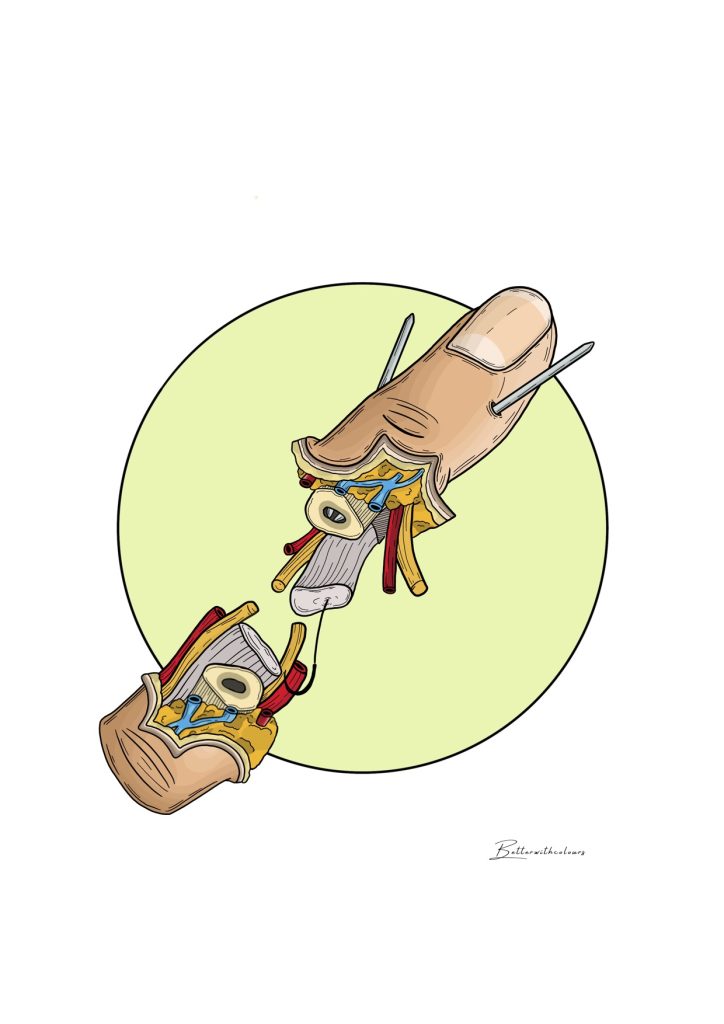
Finger or Hand Reimplantation
When a finger or hand amputation occurs, it is possible to reattach it, reconnecting all necessary structures such as blood vessels and nerves using microsurgical techniques.
Pseudoarthrosis
In cases of fractures that do not heal despite proper treatment, a "live" bone tissue can be added by creating bone flaps, thus improving the chances of success.
Skin Coverage
Often, after trauma or infection, skin loss may occur, exposing structures that are essential for hand function (such as nerves or tendons). Microsurgery allows us to take skin from another area of the body to cover these defects; this is known as "free flaps."
Other Procedures
It is used in a multitude of procedures where tissue transfer may be necessary, such as in the case of severe hand or finger contractures.
Benefits of Reconstructive Microsurgery of the Hand
Reconstructive microsurgery offers several advantages over traditional hand surgery, especially when dealing with complex injuries:
Precision and accuracy
Thanks to the use of a surgical microscope, surgeons can operate on extremely small structures, improving the quality of the repair.
Reduced invasiveness
Smaller incisions and the precision of the procedure result in less trauma to surrounding tissues, reducing postoperative pain and the risk of complications.
Faster recovery
Microsurgery allows for a faster recovery compared to traditional procedures, facilitating earlier rehabilitation.
Improved Functional Outcomes
The ability to precisely repair nerves, blood vessels, tendons, and tissues, and the possibility of grafting any tissue from a distance, translate into better long-term functional outcomes.
Complex Procedures
Without microsurgery, many necessary interventions for complex hand injuries, such as reimplantation, free flaps, nerve reconstruction, etc., could not be performed.
When is Reconstructive Microsurgery Necessary?
Reconstructive microsurgery is primarily recommended in cases of complex hand injuries or injuries to functionally important structures, such as:
- Severe traumatic injuries of the fingers, hand, or wrist, such as deep lacerations or partial amputations.
- Nerve damage affecting movement or sensation.
- Injuries requiring reconstruction of blood vessels to ensure adequate circulation.
- Injuries to tendons, ligaments, or other structures requiring high-precision repair.
- Treatment of burns or contractile scars affecting hand mobility.
- Recalcitrant pseudoarthrosis of the hand or forearm.
- Need for hand coverage due to traumatic injuries or other causes.
Would you like a valuation? Make an appointment with us.
Every case is unique. If you need an expert opinion on your situation, we will be happy to help you. Fill in the form and we will contact you to give you a personalised assessment and, if you wish, arrange an initial appointment.