
Peripheral Nerve Surgery
Peripheral nerve surgery refers to surgery performed on the nerve structures (nerves) after they leave the spinal cord. These nerves are essential for communication between the central nervous system and the rest of the body, enabling movement, sensation, and other functions. When these nerves are injured, various functional alterations can occur, clinically manifesting as loss or alteration of sensation, muscle weakness, pain, vasospasm, and other symptoms.
The goal of peripheral nerve surgery is to restore function by repairing the affected nerves using different surgical techniques.
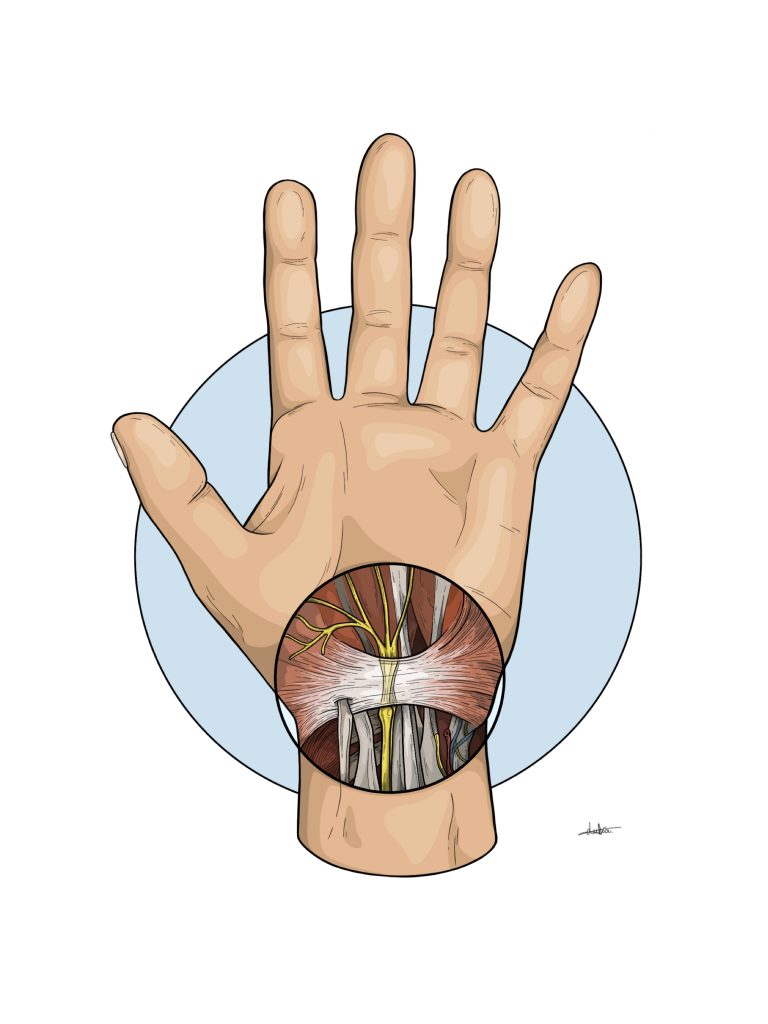
Causes
The etiology of peripheral nerve injuries is very diverse, the most frequent being:
Trauma
It is common for injuries to the nerves near the site of trauma or injury to occur, and these injuries may initially go unnoticed.
Nerve compression
On their way from the spinal cord to their target organs, nerves travel surrounded by multiple structures, and can be compressed at different points. The most frequent nerves and sites of compression are: compression of the median nerve at the level of the carpal tunnel (carpal tunnel syndrome) or as it passes through the antecubital fossa (Lacertus syndrome or teres nerve); the ulnar nerve as it passes through the epitrochleo-olecranon canal or Guyon's canal; and the radial nerve as it passes through the supinator muscle (arcade of Frohse) or its sensory branch under the brachioradialis muscle (Watenberg syndrome).
Metabolic diseases
Some diseases, such as diabetes, or certain treatments, can cause nerve damage, known as neuropathy, with diabetic neuropathy being very common.
Other causes
There are other diverse etiologies, such as infections, autoimmune disorders, iatrogenic factors, etc.
When is peripheral nerve surgery necessary?
It largely depends on the specific pathology, its cause, and the duration of the injury. Early and specialized treatment is crucial for these injuries, as severe nerve damage (such as complete transection) worsens the longer the intervention is postponed, and there may be no improvement after 12-18 months. Peripheral nerve surgery is generally recommended in the following cases:
Severe nerve compressions or those that do not improve with conservative treatment
Severe traumatic injuries
When a nerve transection occurs, early neurorrhaphy (nerve repair) is recommended. In cases of traction, surgery is recommended if there is no improvement in the months following the injury.
Pain
Neuropathic pain often originates from nerve injuries and can be significantly improved with surgery.
Types of Peripheral Nerve Surgery
There are many surgical techniques, and the one chosen depends on the individual characteristics of the patient and the injury. Generally, they are a combination of: neurolysis (nerve decompression), neurorrhaphy (nerve repair), nerve grafts (when direct suturing is not possible), nerve transfers (a donor nerve is transferred to a recipient nerve to try to restore function), and palliative surgery (in cases of long-standing injuries, procedures are often performed on tendons, joints, and bones to try to restore function).
Would you like a valuation? Make an appointment with us.
Every case is unique. If you need an expert opinion on your situation, we will be happy to help you. Fill in the form and we will contact you to give you a personalised assessment and, if you wish, arrange an initial appointment.