
Hand traumatology and sequelae
What is a traumatic hand injury?
A traumatic hand injury refers to any injury that affects the anatomy and function of the hand, usually as a result of an accident or direct impact. These injuries can range from superficial wounds and fractures to more complex injuries involving deep structures such as nerves, blood vessels, and tendons. Proper and timely treatment is essential to prevent complications and restore as much hand function as possible.
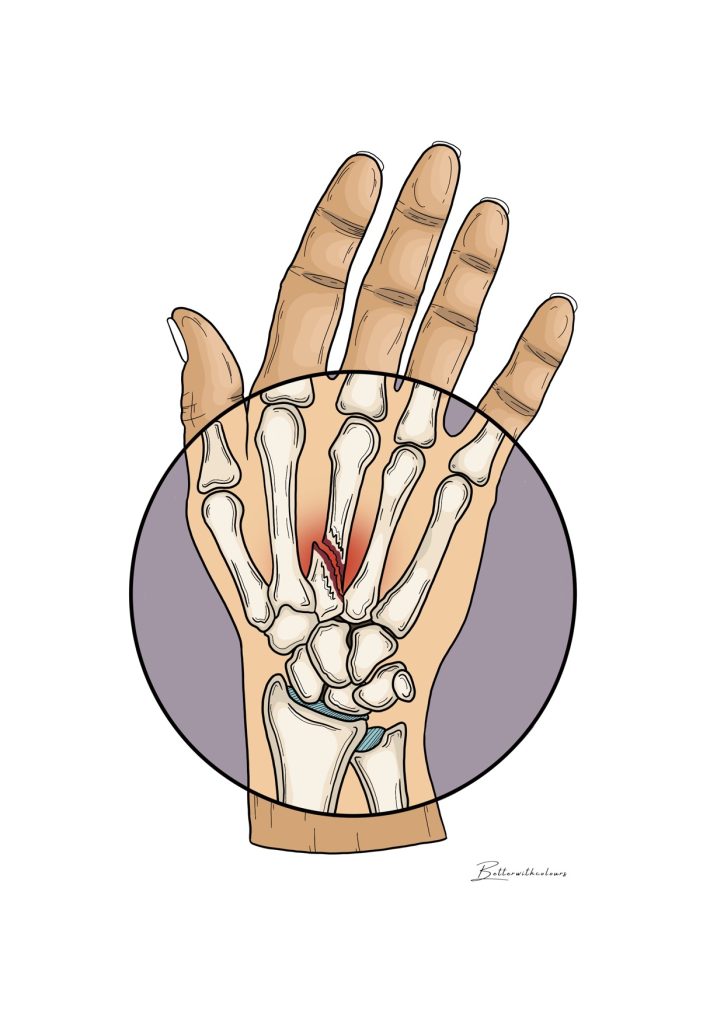
Main Pathologies of Traumatic Hand Injuries
Acute tendon injuries are those that occur suddenly, generally as a result of direct trauma, a cut, or sudden, intense physical exertion. At this level, different types of injuries can be distinguished:
- Hand bone fractures
Fractures are common injuries that occur after a direct blow, a fall, or an accident. Fractures can affect the bones of the fingers, wrist, or the base of the hand. Depending on the severity, they may require immobilization or surgery for correction.
- Tendon Injuries
Tendons are structures that allow movement of the fingers and wrist. Injuries to these tendons, such as tears or ruptures, can occur as a result of direct trauma or repetitive strain. These injuries often require surgical repair to restore hand function.
- Nerve Injuries
The nerves in the hand, such as the median or ulnar nerve, can be injured due to cuts, compression, or traction during trauma. Loss of sensation, muscle weakness, or pain can be symptoms of these injuries. Depending on the severity of the damage, surgical treatment may be necessary to repair the affected nerves or improve hand function.
- Vascular Injuries
Trauma to the hand can also involve damage to blood vessels, which can lead to problems with blood flow to the hand. It is crucial that these injuries be treated within a few hours of the accident to prevent tissue ischemia and ensure proper hand recovery.
- Dislocations
Dislocations occur when the bones of a joint are pushed out of place, causing the joint to no longer fit properly. They are often accompanied by bruising, pain, or decreased range of motion. Dislocations require proper reduction and, in some cases, surgery to ensure proper healing and function.
- Crush Injuries
Severe trauma, such as that caused by the pressure of heavy machinery or traffic accidents, can result in crush injuries. These injuries are usually serious and can affect multiple structures of the hand, so immediate treatment is essential to preserve function and avoid amputations.
Would you like a valuation? Make an appointment with us.
Every case is unique. If you need an expert opinion on your situation, we will be happy to help you. Fill in the form and we will contact you to give you a personalised assessment and, if you wish, arrange an initial appointment.