
Dupuytren's Disease
What is it?
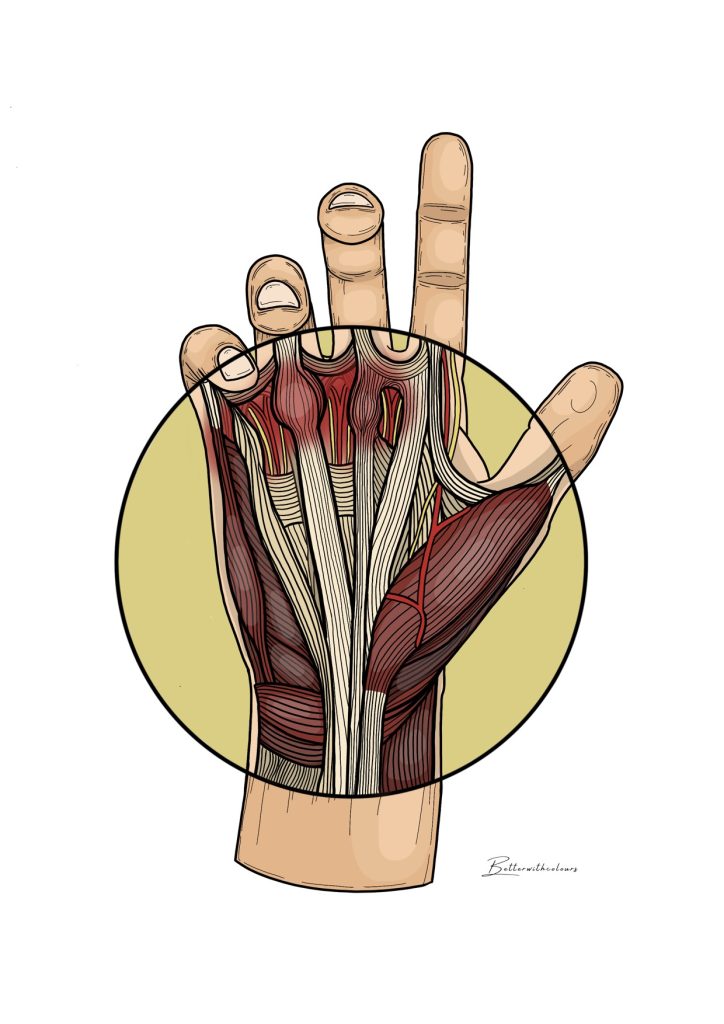
Dupuytren’s disease is a fibroproliferative disorder that affects the palms of the hands (specifically, the palmar fascia), causing progressive flexion of the fingers until they become flexed. It is associated with other conditions such as Ledderhose disease and Peyronie’s disease.
Etiology
The exact cause of Dupuytren’s disease is unknown, although it appears to have a genetic component influenced by certain environmental factors. It is more common in men over 50 years of age and is associated with alcohol consumption and diabetes.
Symptoms
The onset of symptoms is usually insidious, with highly variable progression among patients. The initial symptom is typically the appearance of nodules on the palm of the hand, which may remain stable for years. Progressively, cords form, causing progressive flexion contracture of the fingers, most frequently affecting the 4th and 5th fingers, although it can appear anywhere on the hand.
Diagnosis
The diagnosis of Dupuytren’s disease is based on a thorough medical history and physical examination of the hand, during which the surgeon can palpate the nodules and cords on the palm and assess the degree of finger flexion, as well as the range of motion. It generally does not require additional studies.
Treatment of Dupuytren's Disease
Treatment for Dupuytren’s disease depends on the severity of the condition, the degree of contracture present, and the patient’s ability to function in daily activities. Treatment should always be individualized. Although there is no cure for the disease, several therapies can improve hand function. The main treatment options are:
- Observation
In mild cases or when the disease does not significantly affect hand function, treatment may be limited to observation. The disease progresses slowly and can take years to develop.
- Physical Therapy
In the early stages, physical therapy and stretching exercises can help maintain finger mobility and slow the progression of the disease.
- Collagenase Injections
In some cases, collagenase injections may be used. This enzyme helps to “dissolve” the cords and thus improve finger mobility.
- Surgery
If a flexion contracture interferes with daily activities, the patient may benefit from surgery to regain functionality and range of motion.
Would you like a valuation? Make an appointment with us.
Every case is unique. If you need an expert opinion on your situation, we will be happy to help you. Fill in the form and we will contact you to give you a personalised assessment and, if you wish, arrange an initial appointment.