
Brachial Plexus Surgery
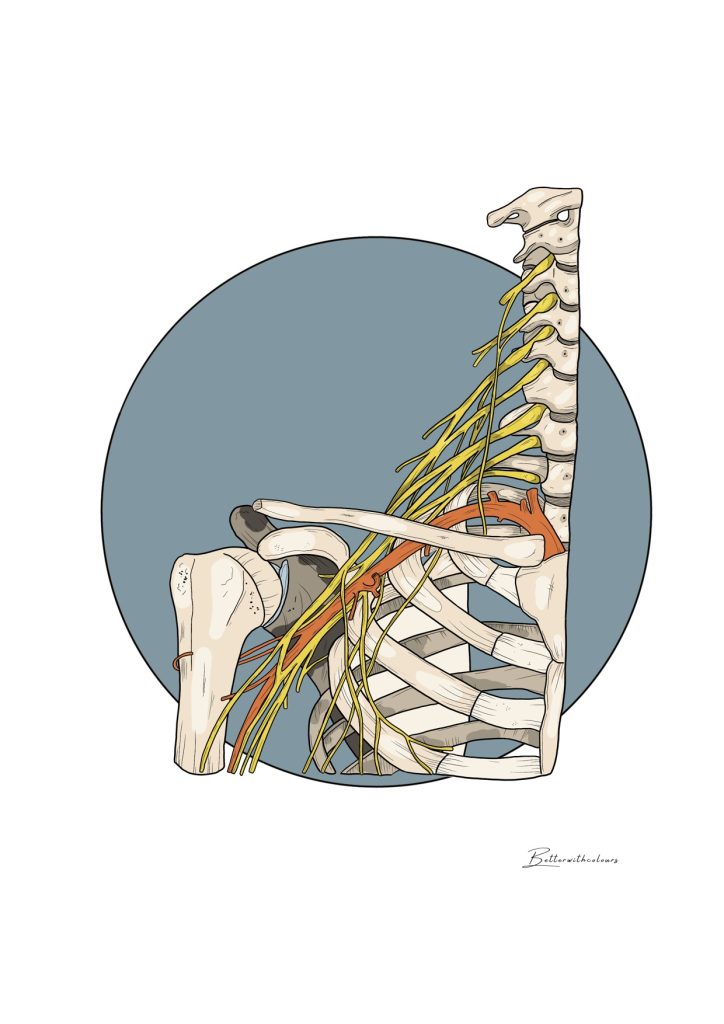
The brachial plexus consists of the nerves that exit the spinal cord in the neck and travel to the arm, providing it with all its motor and sensory function. Given its crucial role in upper limb function, injuries to this area are often devastating, requiring accurate diagnosis and specialized treatment to restore function.
Causes of Brachial Plexus Injuries
Brachial plexus injuries can have various causes, although the most frequent are:
Traffic accidents
Traffic accidents (especially motorcycle accidents) are the most frequent cause of brachial plexus injuries in adulthood.
Traumatic injuries
Wounds to the proximal arm or cervical spine can cause direct damage to the brachial plexus.
Childbirth
This is the most frequent cause of brachial plexus injuries in children.
Chronic compression
Mechanical compression at this level sometimes occurs due to neighboring structures, as in the case of thoracic outlet syndrome.
Tumors
The presence of nerve tumors at this level can cause pathology in the brachial plexus (usually by direct compression).
Signs and Symptoms
Signs and symptoms are present from the moment of nerve injury. The severity and location of the symptoms will vary depending on the severity and location of the nerve damage, but it is usually a combination of:
Loss of mobility or significant muscle weakness in the arm or hand.
Loss of sensation, which may extend from the shoulder to the fingers.
Chronic neuropathic pain.
Other
Difficulty breathing (due to phrenic nerve injury), miosis (Horner's syndrome), etc.
Treatment of Brachial Plexus Injuries
Depending on the patient’s characteristics and the injury (neuropraxia, axonotmesis, neurotmesis), treatment can range from rehabilitation and physical therapy to invasive surgical procedures. Rehabilitation is used for milder cases, while surgery is reserved for cases where spontaneous recovery from the injury is not expected (neurotmesis and some cases of axonotmesis). In general, the surgical procedures used are:
- Nerve reconstruction: In cases of repairable injuries, the affected tissue is usually resected and reconstructed using nerve grafts from the patient.
- Nerve transfers: In cases of irreparable injuries, or in some cases of repairable injuries, a healthy donor nerve is transferred to an affected recipient nerve to try to restore the latter’s function.
- Free muscle transfers: This involves transferring a muscle from a distance (usually the gracilis muscle of the thigh) to reconnect it to the upper limb and restore function (frequently to regain elbow or finger flexion).
- Tendon transfers: In many cases, tendon transfers from functioning muscles are performed to try to recover some of the lost function.
- Osteotomies and arthrodesis: Procedures on the bones to try to improve the function of the upper limb.
- Osteotomies and arthrodesis: Procedures on the bones to try to improve the function of the upper limb.
Would you like a valuation? Make an appointment with us.
Every case is unique. If you need an expert opinion on your situation, we will be happy to help you. Fill in the form and we will contact you to give you a personalised assessment and, if you wish, arrange an initial appointment.